Article: Self-Care13 November 20263 min read
Making Time for Rest: A Relaxing Evening Routine
A softer end to the day doesn't need candles and an hour to spare. Small, repeatable steps that help your evening slow down.
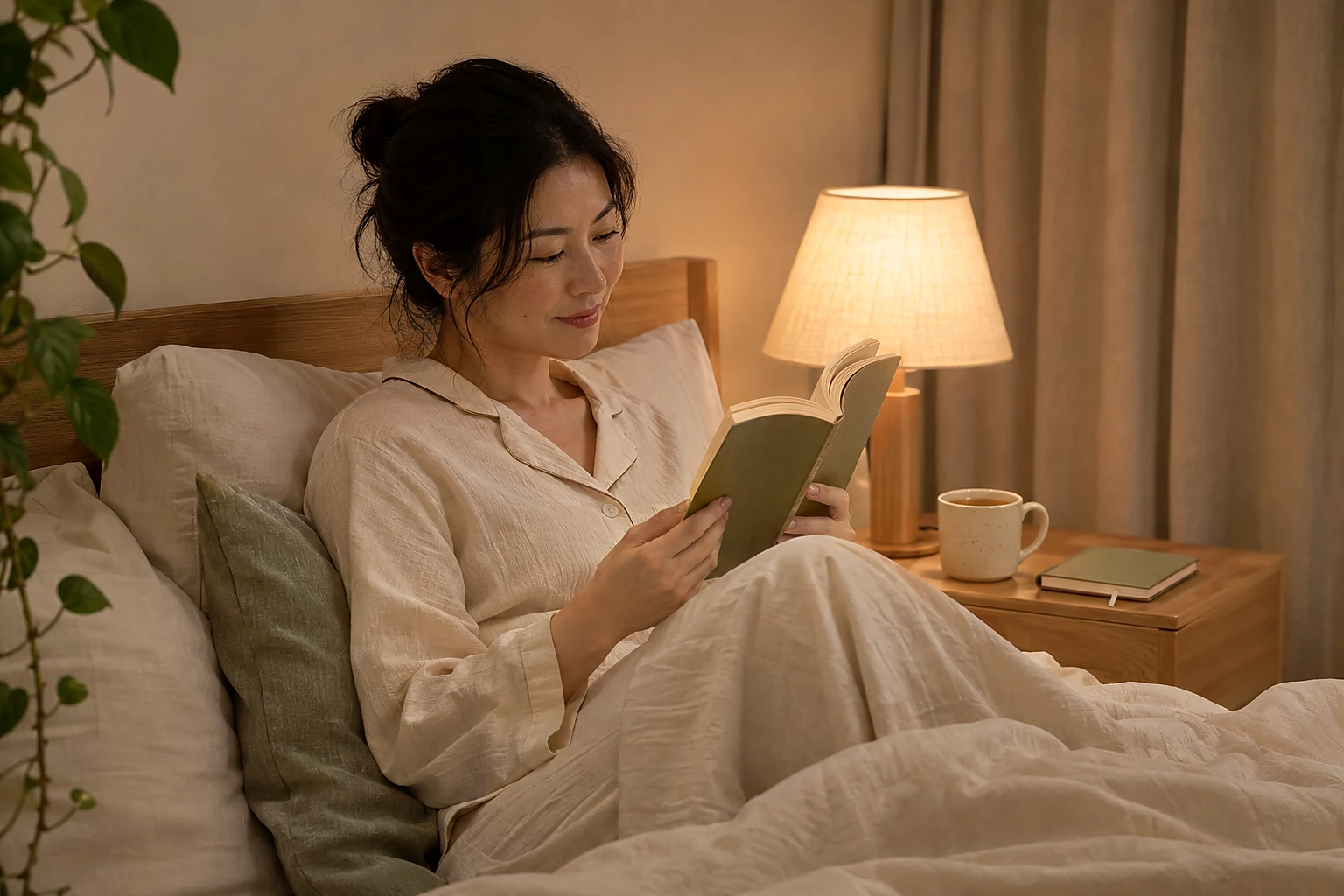
Many of us carry the pace of the day straight into the night. Messages arrive until bedtime, the television stays on, and sleep becomes the moment we finally stop rather than something we ease into. A relaxing evening routine is simply a way of creating a gentle slope between the two.
It does not need to be elaborate or perfect. The best routine is the one you can repeat on an ordinary Tuesday.
Why the evening matters
Sleep guidance from trusted sources is remarkably consistent. The CDC recommends going to bed and getting up at the same time each day, keeping the bedroom quiet, relaxing and cool, and turning off electronic devices at least thirty minutes before bed. Mayo Clinic adds sensible advice about avoiding heavy meals, caffeine and alcohol close to bedtime.
None of this is complicated. The challenge is making room for it, which is where a routine helps.
Begin about an hour before bed
Think of the last hour as a gradual dimming, not a hard stop.
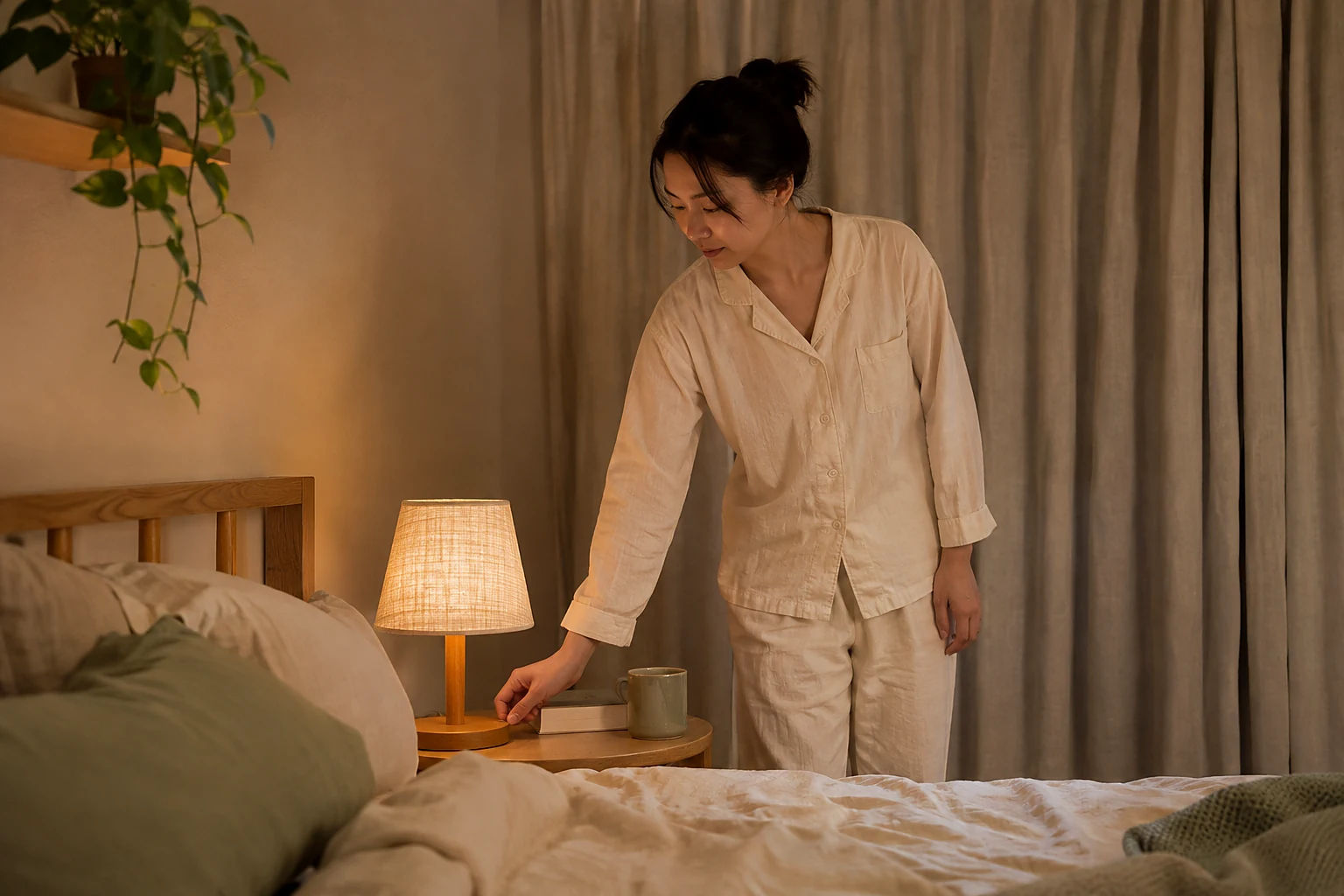
Lower the lights
Switch from bright overhead lights to softer lamps. It is a small signal, but it tells the household — and you — that the day is winding down.
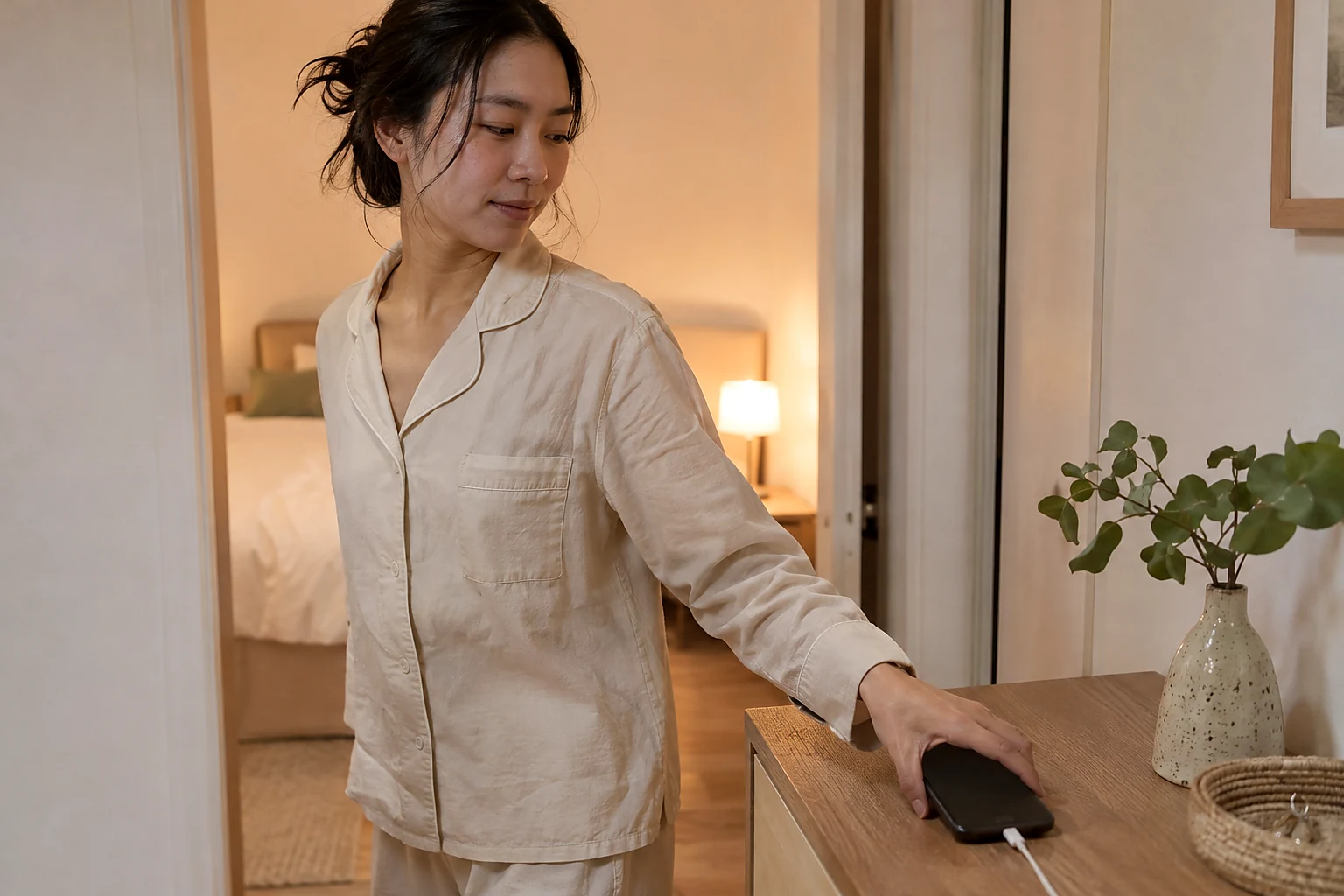
Put the phone somewhere else
Charging your phone outside the bedroom removes the temptation to check one last thing. If that feels like too much, try setting it to silent and face down at a fixed time.
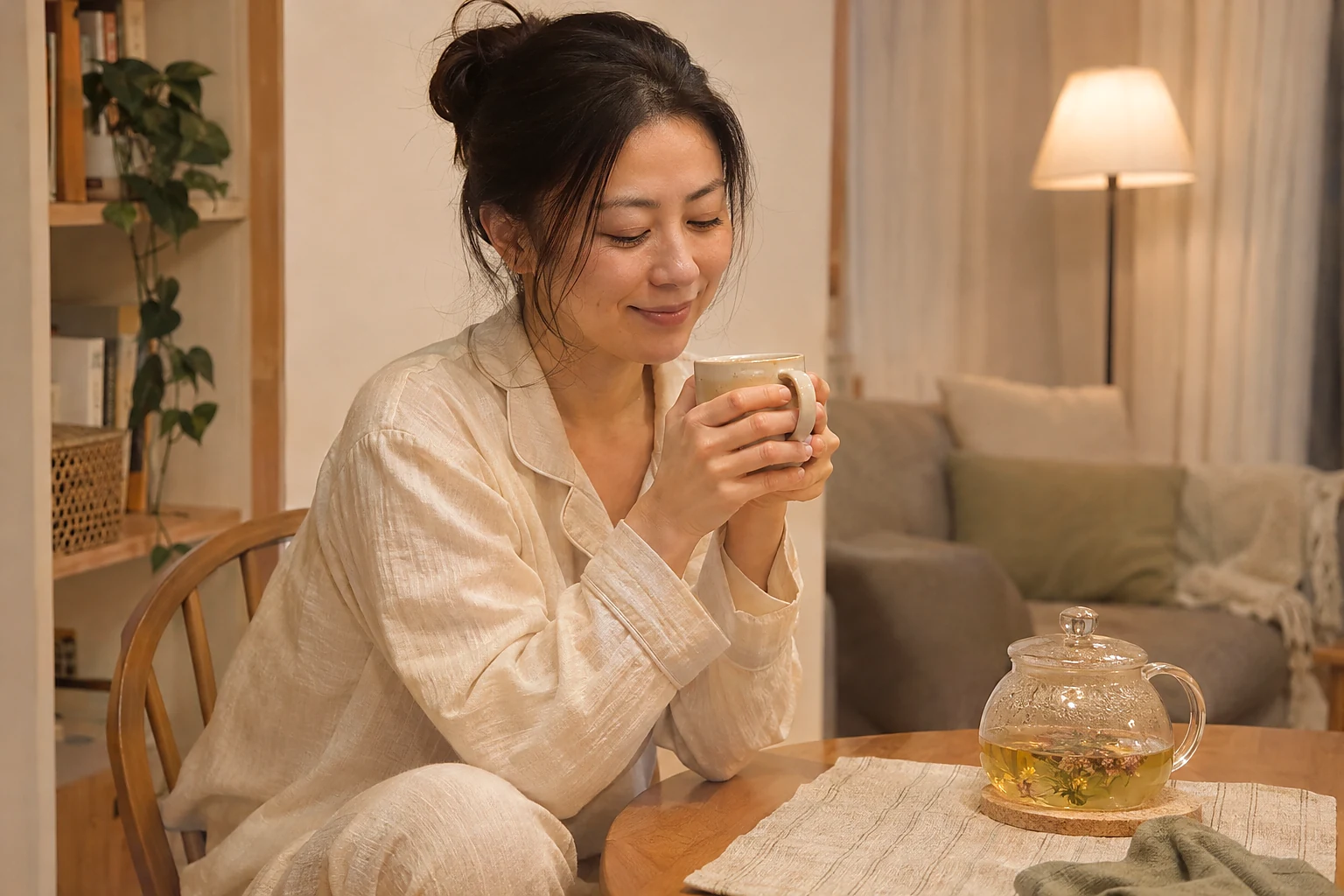
Something warm and simple
A warm shower, a caffeine-free drink or changing into comfortable clothes can mark the transition. Choose whatever feels pleasant and easy to repeat, and let it become a cue that the busy part of the day is over.
Release the day from your body
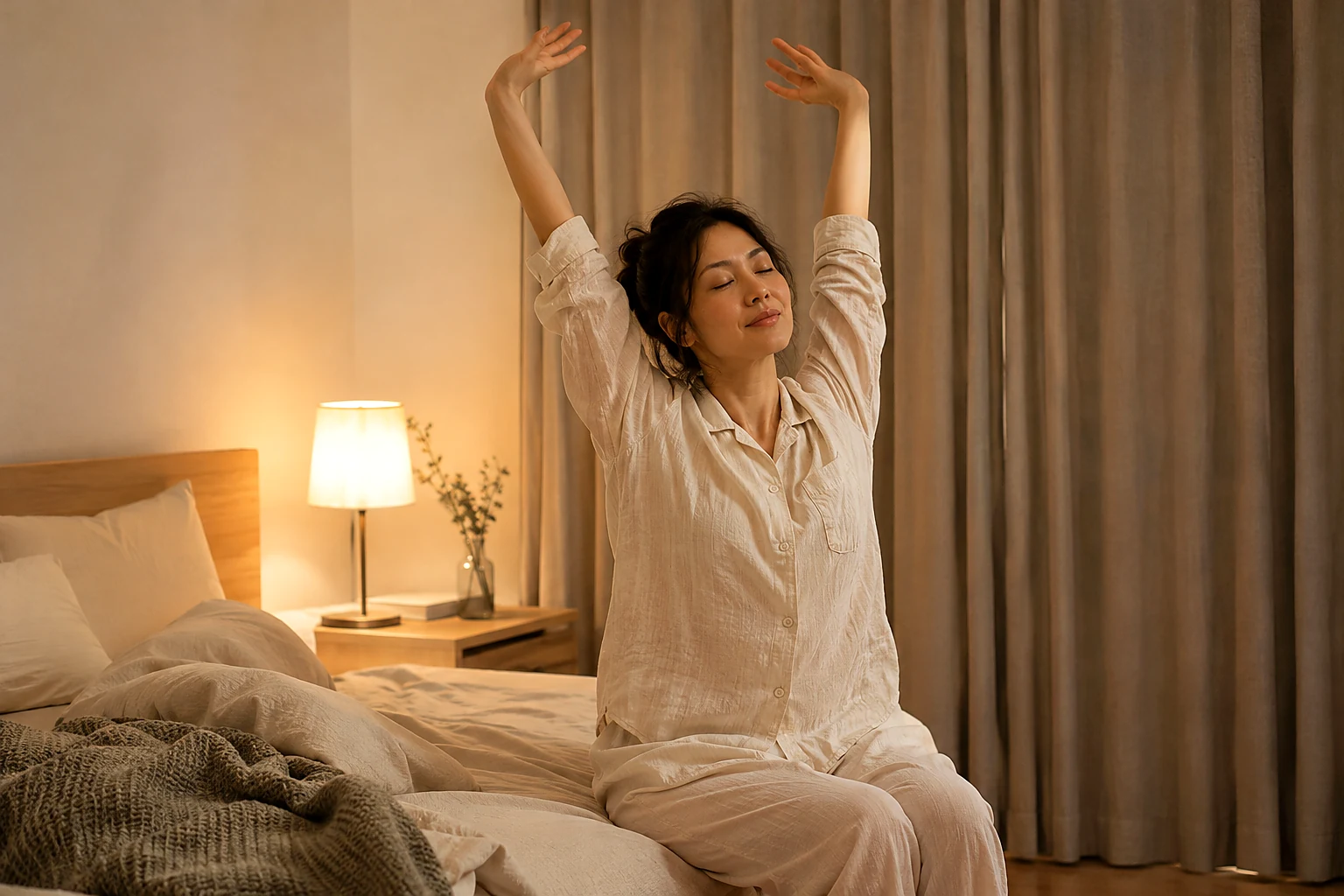
After hours of sitting, a few minutes of gentle movement can feel wonderful. Roll your shoulders, stretch your arms overhead, and let your neck tilt slowly from side to side. Nothing should hurt; you are simply reminding your body that it can soften.
Slow breathing is another quiet tool. NCCIH describes breathing exercises and progressive muscle relaxation among the techniques people use to feel calmer. Try breathing in gently through the nose for a count of four and out for a count of six, a handful of times.
Quiet the mind
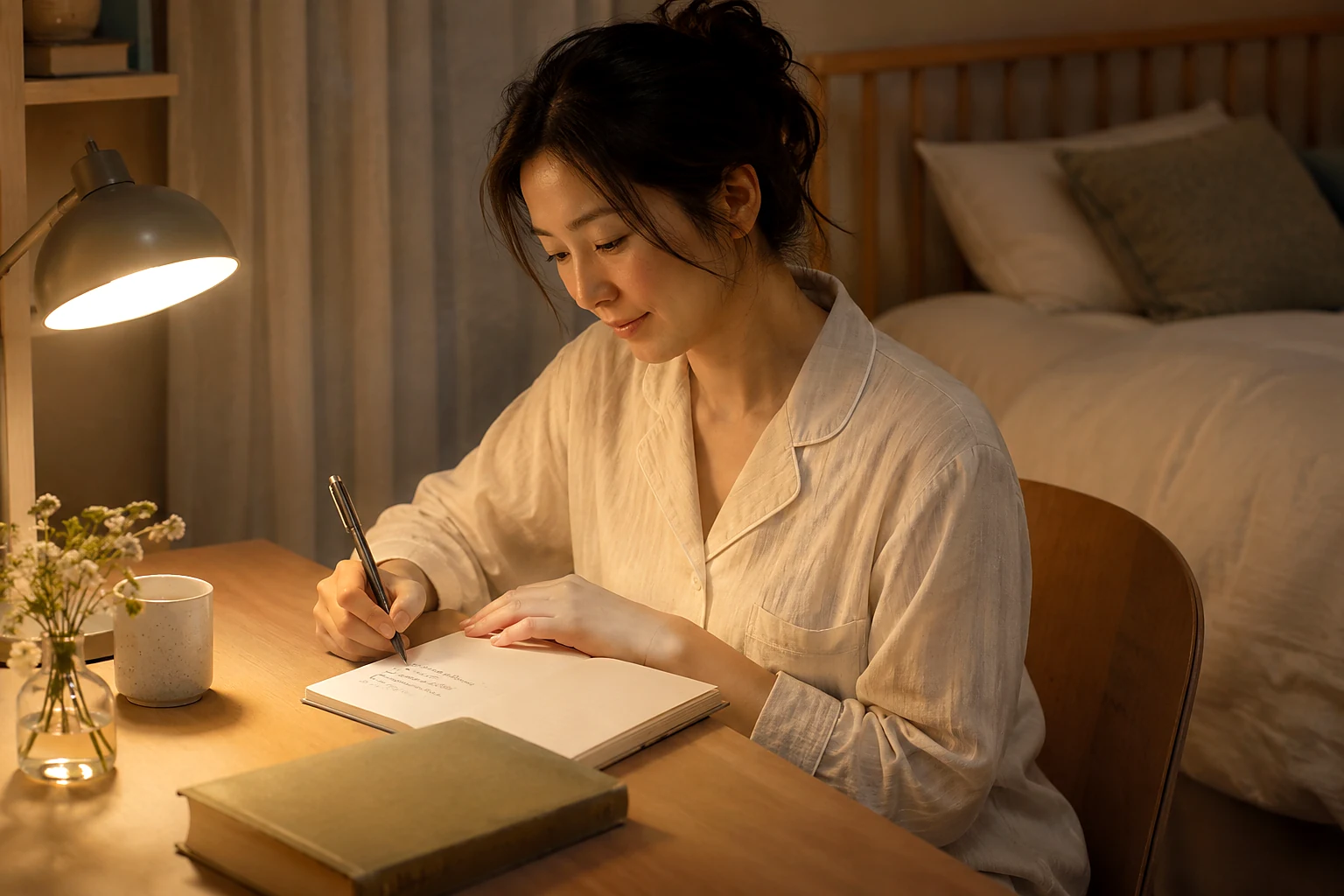
If your thoughts keep racing, give them somewhere to go. Writing tomorrow's three most important tasks on paper can make it easier to stop rehearsing them in bed. A few pages of a book — paper, ideally — offers a gentle place for your attention to rest.
Mayo Clinic suggests that if you do not fall asleep within about twenty minutes, it can help to get up and do something relaxing before trying again, rather than lying there frustrated.
A simple routine to try
Here is one example. Borrow what suits you and leave the rest.
- 60 minutes before bed: dim the lights and finish screens.
- 45 minutes: warm shower and comfortable clothes.
- 30 minutes: a few gentle stretches and slow breaths.
- 20 minutes: jot down tomorrow's priorities, then read.
- Lights out at roughly the same time each night.
Bringing in a little spa calm
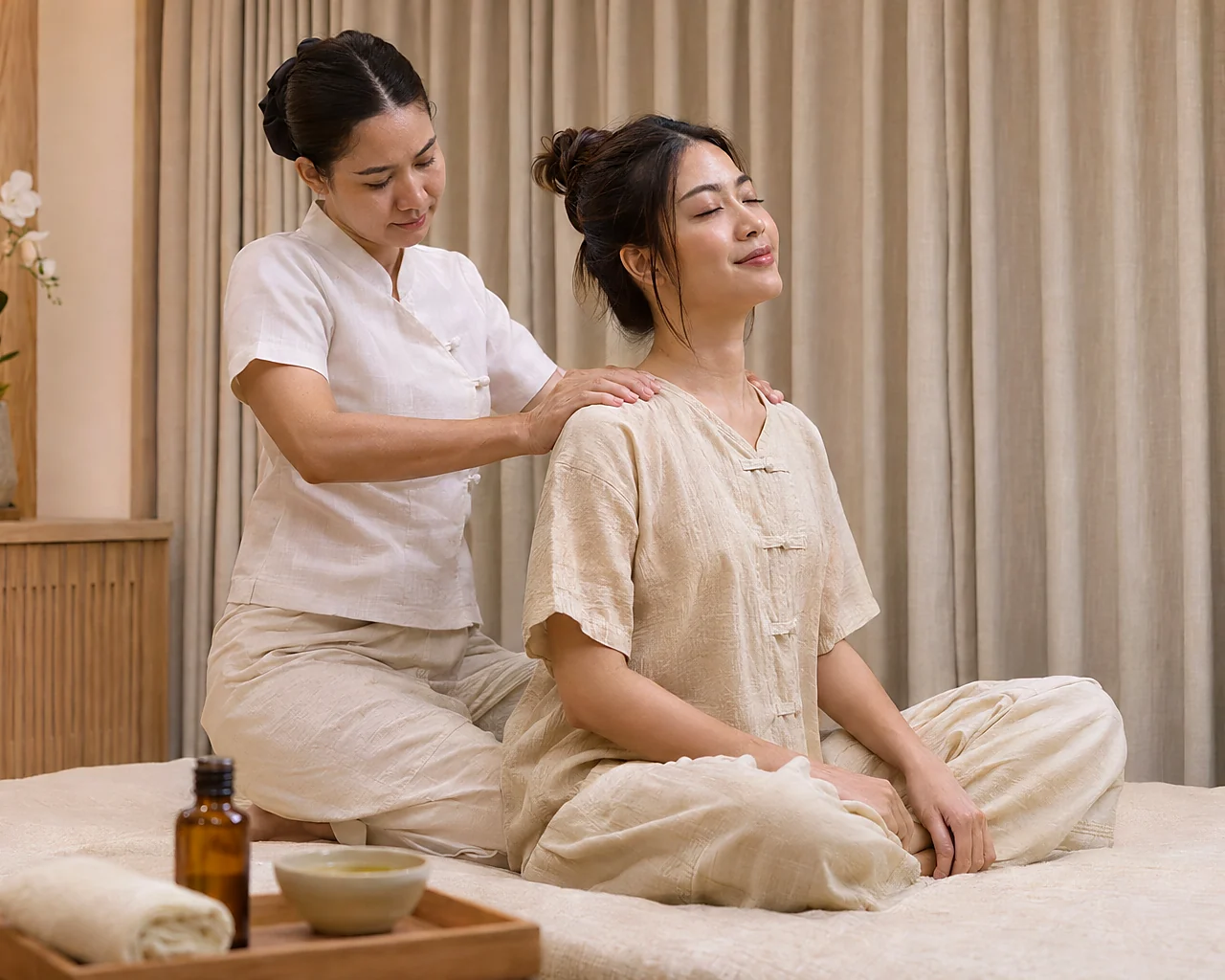
An evening massage can be a lovely way to begin a quiet night at home — many guests enjoy a slow Aromatherapy Massage or the warmth of an Oil Herbal Compress at the end of a long week. If you would like something shorter, a Foot Massage is a gentle way to unwind.
If sleep difficulties continue for weeks or affect your daytime life, the CDC encourages speaking with a healthcare provider. A routine is a comfort, not a substitute for proper care.
Sources
These articles are general reading, not medical advice. If you have a health condition, are pregnant, or are unsure what's suitable for you, check with your doctor and let our team know.